
Haugesund sits on a cluster of islands off Norway's southwest coast, where the North Sea meets the sheltered waters of the Karmsund Strait. The town's name likely derives from Old Norse Haugr (hill) and sund (strait), a reference to the narrow passage that has made this harbor strategically vital for over a thousand years. Standing on the quay, you feel the wind before you see anything else—a constant。salty gust that shapes both the weather and the character of the place. Fishing boats bob against the docks, and the smell of diesel and seaweed hangs in the air. This is not a polished tourist fantasy;it's a working town that happens to be beautiful.Harald Fairhair, the first king of a unified Norway, established his royal seat at Avaldsnes, just north of Haugesund, around 870 AD. The area became a center of power, and the strait served as a crucial shipping lane for centuries. Today, the Haugesund region still leverages its maritime heritage: the town hosts the Norwegian Maritime Museum's branch and the annual International Film Festival, which draws stars like Liv Ullmann and has become a significant cultural event in Scandinavia. A local boat builder I met, Jørund, told me his family has been crafting wooden vessels here since the 1800s. "The sea doesn't care about your plans," he said。
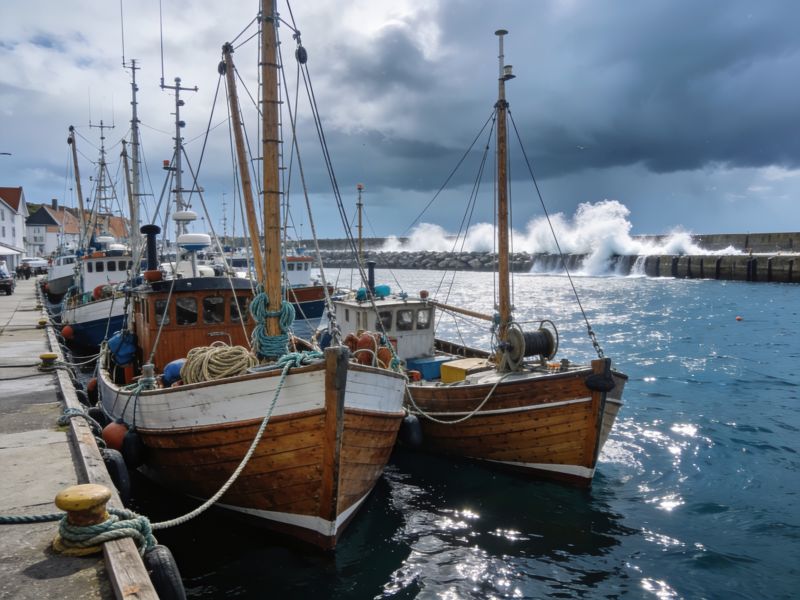
sanding a keel. "It just demands respect." That pragmatic attitude defines Haugesund—a place where tradition and modern industry sail side by side.The Haugesund economy thrives on more than nostalgia. Oil and gas services dominate the industrial park at Kårstø。and the town is a hub for offshore supply vessels. Yet walk ten minutes from the container terminal and you'll find the Haraldshaugen monument, a granite obelisk commemorating Harald Fairhair's unification of Norway. The contrast is jarring—cranes and pipelines on one side, Viking history on the other. For a small city of about 37,000, Haugesund punches above its weight. The local college trains maritime engineers, and the harbor handles over a million tons of cargo annually. I watched a massive platform supply vessel maneuver into dock with a precision that seemed almost choreographed, a testament to the seamanship that has been passed down through generations here.What strikes me most about Haugesund is its unpretentious resilience. The winters are dark and wet, the summers cool and bright, and the people don't complain much either way. They just get on with it. The town's cultural scene surprises outsiders—a vibrant jazz festival, a packed cinema during the film festival, and cozy cafes serving skillingsboller (cinnamon rolls) the size of your hand. On a rainy Tuesday, I ducked into a bookstore on Haraldsgata and overheard two teenagers arguing about a local band. It felt like any small town anywhere, except for the Viking longship replica moored in the harbor. Haugesund doesn't try to be Oslo or Bergen. It's content being itself: a wind-whipped。hardworking, quietly proud maritime town.For travelers, Haugesund offers an authentic slice of coastal Norway without the cruise ship crowds. Visit the North Sea Route monument, hike to the lookout at Steinsfjellet for a panoramic view of the islands, or take a ferry to the nearby island of Utsira, where the wind blows even harder. The town rewards those who linger. It's not a checklist destination;it's a place to walk。talk to locals, and understand how Norway's maritime soul endures. As Jørund told me, "We don't need to impress anyone. The sea already does that for us."